Did you know that weight lost can lead to time gained with your beloved cat?
Weight gain is a common issue with cats, especially for indoor cats or older cats with slower metabolisms. Maintaining a healthy weight is essential for the happiness and longevity of your cat’s life. Carrying excess weight can not only lead to health problems like diabetes, osteoarthritis, and heart disease in cats, but it also affects their mental health and playfulness. We have compiled a couple of signs to look out for regarding your cat’s weight and the steps you can take to help them thrive.
How to Tell If Your Cat Is Overweight
The best way to answer, “Is my cat obese?” is to stay up to date on their
routine wellness appointments. Your veterinarian will measure your cat’s weight at each visit so they can monitor any weight changes, compare it with their ideal weight range, and provide their professional diagnosis.
Between annual wellness visits at your veterinarian, there are some clear signs you can look for to get an idea of whether your cat is overweight:
1. Feel for your cat’s ribs.
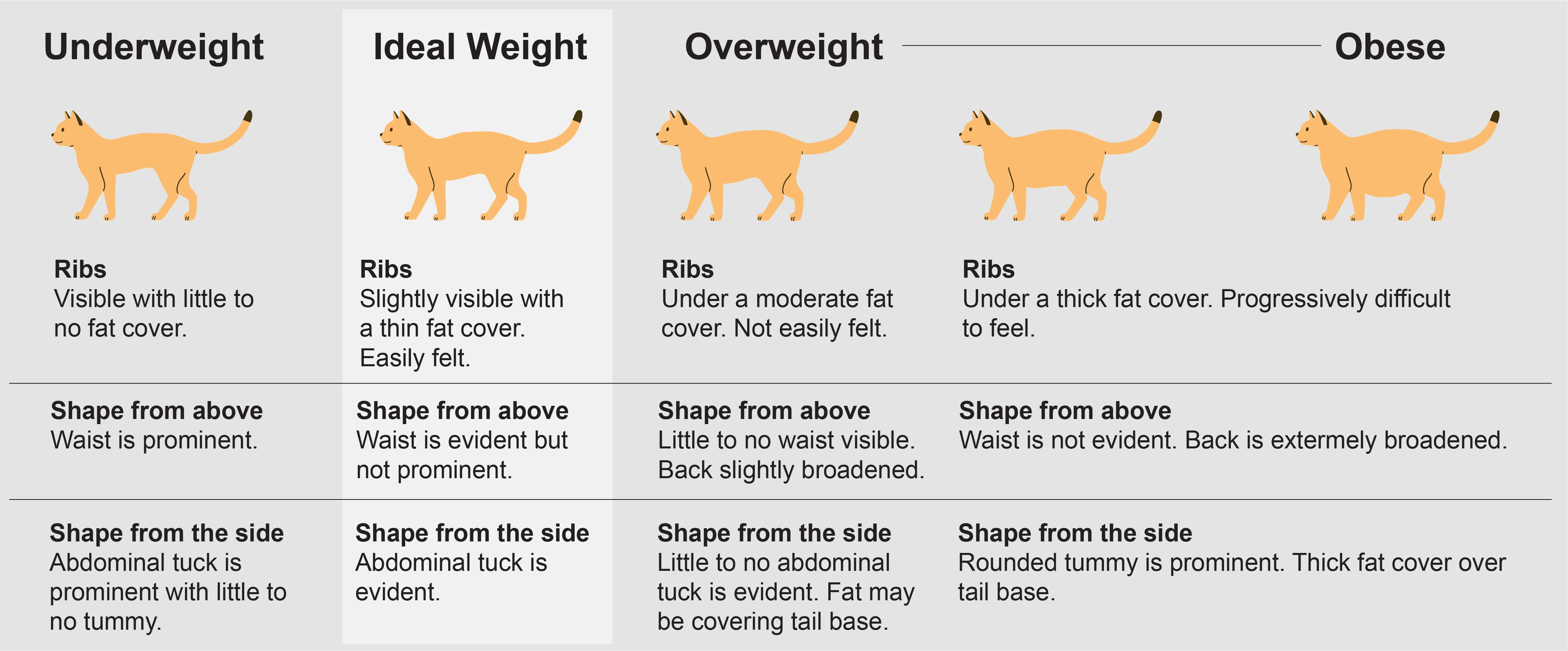
The padding around a healthy cat’s rib cage will be about as thick as the padding on the back of your hand. If you cannot feel your cat's ribs at all, or if you can only feel them when pressing firmly, then it’s possible that your cat is overweight.
2. Look at your cat’s waistline.
Begin by looking down at your cat when they are standing. There should be a slight indentation above the hips resembling a waist. If the waist area bulges out instead, this can be a key sign that your cat is overweight. This may be tricky with long haired cats; if your cat has long hair, perform this exercise during bathing when your cat’s fur is wet.
This diagram provides an easy reference for how to tell if your cat is overweight:
I Think My Cat Is Overweight. What Should I Do?
If you suspect your cat is overweight, the first thing you'll need to do is
book an appointment with your vet who will examine and weigh your pet. Your veterinarian can then let you know if your cat is overweight based on the standards for their breed, size, and age.
Your pet’s care team will provide some recommendations on steps you can take to help your cat get back to or maintain a healthy weight. See below for some of their potential recommendations.
How Can I Help If My Cat Is Overweight?
If your vet finds that your cat is overweight, they will likely prescribe an exercise routine and a personalized diet to help your cat get back to a healthy weight. It’s important that you talk with your vet and follow their recommendations as some weight-loss interventions may not be suitable for your cat’s unique needs.
Here are some things you may be able to do to help your cat lose weight:
Regular Exercise & Play
Cats typically don't need a lot of exercise to stay healthy, although the ideal amount varies according to the cat's age and breed. In general, aim for two fifteen-minute sessions per day of interactive play, including activities like chasing and leaping after a toy. You may also consider investing in an indoor cat tree to provide extra opportunities to jump and climb.
Find a full list of exercise ideas for cats here > Diet & Feeding
If your cat is overweight, you can help your pet lose weight gradually by feeding a nutritious weight control formula cat food. If your cat is very obese, your vet may prescribe a special therapeutic weight loss food.
Restrict Treats of Human Food
Regularly Check in with Your Vet
Bring your cat to your
local vet hospital to be weighed on a regular basis. This will allow you to monitor their progress and will let your veterinary care team know if further dietary adjustments or testing are needed.
Our shared hope is to see your pet thrive through every stage of life, and we’re committed to being your trusted partner in making that hope a reality. Let’s work together to keep your beloved cat in tip-top shape so you can live a long, happy, and healthy life together.
Please note: The advice provided in this post is intended for informational purposes and does not constitute medical advice regarding your pet. For an accurate diagnosis of your pet's condition, please make an appointment with your veterinarian.