Many pet owners are unaware that full veterinary dental cleanings should typically be performed every 12 months throughout a dog or cat’s lifetime.
Have you always wondered what is different or special about these cleanings, what treatments are done on your pet that you or your groomer couldn’t do? Do you have questions about why it takes so long or why these procedures can sometimes carry a hefty price tag?
We’re here to offer up the answers with a step-by-step explanation of everything that goes into a pet dental cleaning at Thrive Pet Healthcare clinics and our partner primary care vet hospitals.
Why Dogs & Cats Need Annual Full Dental Cleanings
Professional dental cleanings for pets are the only way to fully remove plaque and calculus above and below a dog or cat’s gum-line. Only the visible, easy-to-reach parts of the mouth can be cleaned when brushing your dog’s teeth at home, but during a professional pet dental cleaning, your veterinary team can reach all areas of the mouth, especially below the gum line where periodontal disease can fester.
In addition to a thorough teeth cleaning, each professional dental cleaning in the veterinary office should also include periodontal (gum) probing, a complete oral exam, and full mouth radiographs. In some cases, more involved treatment, like tooth extractions, are also performed if the pet requires these.
The Process of a Pet Dental Cleaning
While their anatomy is different, teeth cleaning procedures for dogs and cats are very similar. The same dental cleaning steps are typically performed for both dogs and cats, but different anesthetic protocols are used for each.
Based on your pet's dental evaluation, which entails an overall wellness exam and a pre-procedural diagnostic that includes bloodwork and urinalysis, additional steps may need to be taken during their dental cleaning. However, if your pet is healthy and has been receiving annual dental cleanings, they will likely follow the typical steps outlined below.
Step 1: Physical Exam and Diagnostic Testing
Since cat and dog dental cleanings involve the use of general anesthesia, it is essential that the veterinary team has a full understanding of your pet’s overall health prior to the cleaning. Your pet will be assessed from head to tail and receive
diagnostic testing to ensure all organs are functioning normally.
If abnormal results are found during this step, the team may alter the way they administer your pet’s anesthesia or they could recommend delaying the dental until other health concerns are resolved and your pet can be safely anesthetized for their cleaning.
Step 2: Sedation with General Anesthesia
While the word “anesthesia” can sound scary for many pet owners, it is essential for the success and safety of all dental cleaning procedures and dental x-rays. Even if your pet shows no signs of active periodontal disease, they will still require anesthesia, which allows for a safer and deeper cleaning. This helps ensure all areas of the mouth are tended to with less stress and pain for your pet.
Once the results are in from the initial exams and your pet is given the green light for their dental cleaning, they will typically be given a sedative and pain medication prior to administering the general anesthesia.
The amount of medication given to your pet is precisely calculated based on their age, weight, breed, blood results, and unique health needs. Throughout the procedure, your pet’s vital signs (i.e., oxygen levels, heart rate, respiratory rate, and blood pressure) will be monitored.
Step 3: Digital Dental X-Rays
Radiographs (x-rays) allow us to capture a whole view of your pet’s oral cavity, going beneath the gum line down to the tooth roots. Dental x-rays are imperative because a tooth may look healthy, but periodontal disease could still be brewing under the surface, damaging the bone structure of the pet’s mouth.
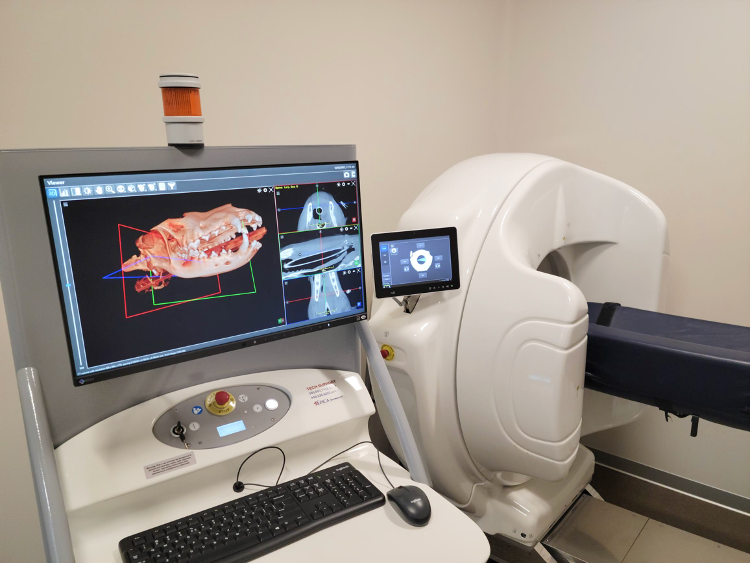
The above machine is a step above your traditional x-ray machine, it's a cone beam CT also known as a computerized tomography available at The PARC in Fort Worth along with a few other specialty locations in our network. It provides high-definition 3D volumetric imaging designed to improve diagnostic capability and efficiency, which enables us to provide care that goes beyond through every stay of your pet's life.
Step 4: Cleaning the Teeth
The cleaning process at most of our veterinary clinics uses an ultrasonic scaler to remove any plaque and calculus/tartar (calcium deposits) that have built up on the surface of the teeth. By using an ultrasonic tool, our veterinarian can also remove substances that have deposited under the gum line.
Step 5: Measuring & Charting
At this point, the doctor will measure and take notes on each of your pet’s teeth, charting their size and condition. These notes allow your vet to compare your pet’s mouth from year to year, track any small changes, and spot subtle indications of potential problems before they progress.
Step 6: Extractions (If Necessary)
Sometimes dental disease or trauma to the mouth can lead to teeth being irreversibly damaged and/or infected. In these cases, it is typically in the pet’s best interest for the tooth to be removed to help prevent further spread of infection or disease.
If the doctor feels that it is best to have one or more of your pet’s teeth removed, a member of the team will attempt to call you to explain the details of this additional procedure and receive your consent before they proceed.
Step 7: Tooth Polishing & Barrier Sealant
Next, your pet’s teeth will be polished to smooth off their surface and remove any scratches. This is important because small food particles can grip more easily to a tooth with ridges and scratches, leading to bacterial growth and plaque formation.
An additional step often used at Thrive Pet Healthcare veterinary hospitals is to then coat the teeth with an invisible sealant. This acts as a barrier to help prevent plaque-forming bacteria from attaching to your pet’s tooth enamel and slow down the progression of dental disease.
Step 8: Irrigation
Finally, your pet’s mouth will be cleared of any remaining debris by rising through with an anti-bacterial solution.
Step 9: Recovery
Most dental cleanings are outpatient procedures so your pet will be ready to go home the same day. Your veterinarian will call you to let you know your pet is awake and provide detailed instructions on after care at home. Make sure you ask any and all questions that you may have to ensure your pet gets the care they need.