Vaccinating is a vital part of preventive care for dogs and cats. Routine vaccinations provide protection against several highly contagious and potentially life-threatening diseases, helping to safeguard your pet’s long-term health and well-being.
Required Vaccines for Dogs
Both puppies and adult dogs require a series of core vaccinations that are recommended regardless of lifestyle or environment. These include DAPP (Distemper, Adenovirus, Parainfluenza, Parvovirus), Rabies, and Leptospirosis.
DAPP VACCINE
This combination vaccine (multiple vaccines in one) protects dogs from the four common and contagious viral canine diseases:
Distemper Virus
Adenovirus (Hepatitis)
Parvovirus
Parainfluenza
Canine Distemper and Parvovirus are both serious, and often fatal diseases, that affect multiple organ systems and may require lengthy hospitalization, so protecting your pup is essential!
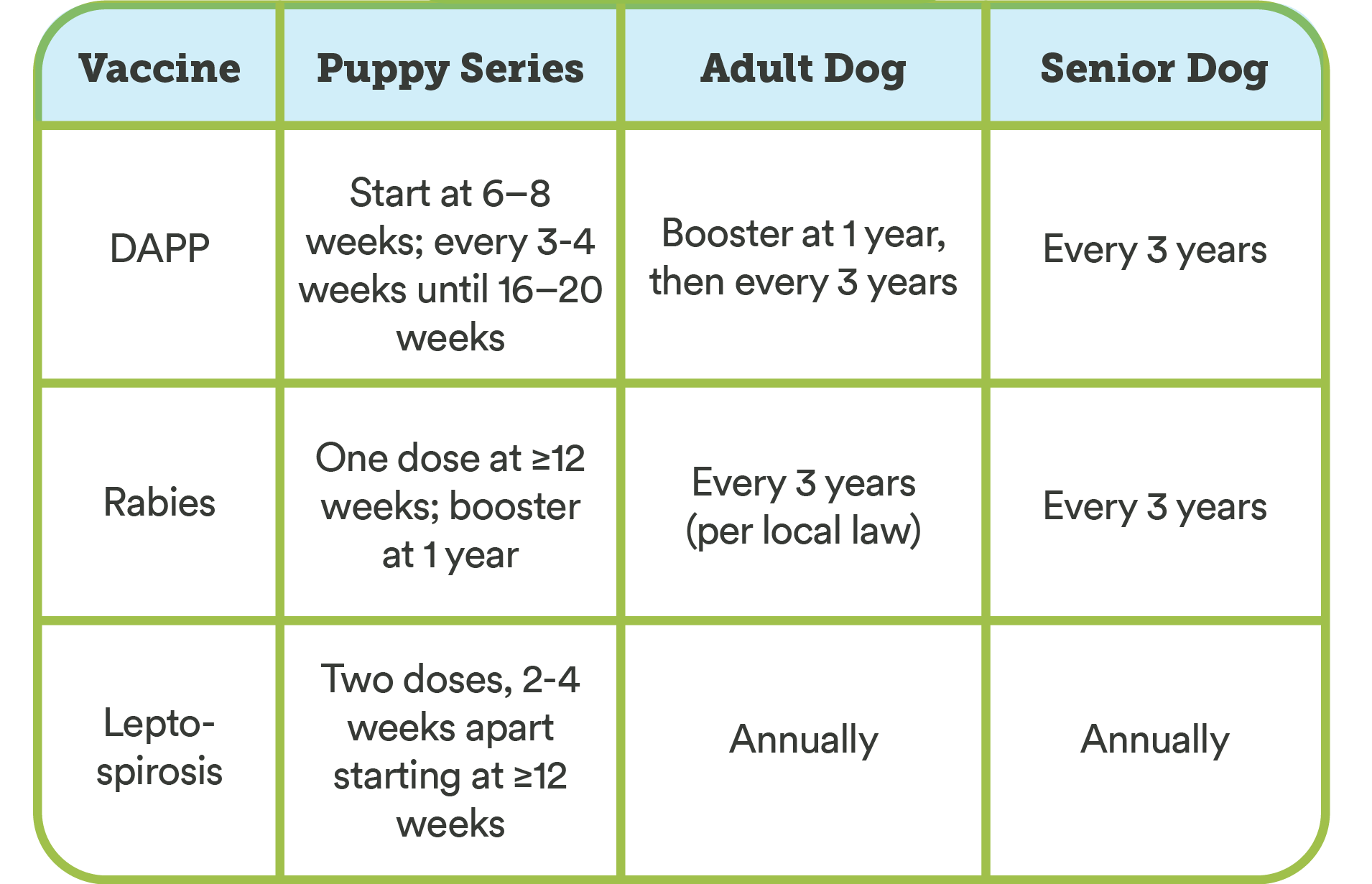
The initial vaccination is administered between 6–8 weeks old; then every 3–4 weeks until 16–20 weeks.
A booster is given at 1 year, and then every 3 years after that.
RABIES VACCINE
Rabies virus can be transmitted to dogs through a bite from an infected animal. Across the US, animals most often infected include raccoons, skunks, and bats—all creatures your pup can come across outdoors. It’s important to note that this disease is fatal.
Since it is one of the few life-threatening diseases that pets can transmit to humans, most states and/or county codes require all dogs to be vaccinated against rabies by law.
Puppies will need this vaccine at 12 weeks of age, followed by a booster a year later.
Revaccination for rabies is required for dogs every 1–3 years (frequency based on local law requirements).
LEPTOSPIROSIS VACCINE
Leptospirosis (also known as “Lepto”) is a zoonotic, highly contagious bacterial infection that is impacting more and more pets across the country. A zoonotic disease is an illness that can spread from animals to people through things like bites, scratches, or contact with their poop, saliva, or other body fluids.
Leptospirosis is often transmitted to dogs when they have contact with, or drink from, warm bodies of water (e.g., lakes, streams, or puddles), walk where an infected animal has been (especially wildlife, rodents, and farm animals), or have direct contact with an infected animal.
The initial vaccination is a 2–dose series separated by 2–4 weeks, starting at 12 weeks old.
Booster vaccinations for leptospirosis should be given once a year.
What Vaccines Does My Dog Need Annually?
In addition to the core vaccines required for dogs, there are various lifestyle-based vaccines like Bordetella, Lyme, and Influenza. These non-core vaccines are recommended based on your pet’s age, home location, daily activities, and frequency of contact with other animals.
Discuss these factors with your veterinarian to see if any of the lifestyle-dependent vaccines are suitable for your dog. Most of these vaccines need yearly boosters to maintain your dog’s protection.
Keep in mind that your pet’s risk of contracting one of these diseases can change at any point. Frequent reassessment with your pup’s veterinary care team is essential in helping your dog stay protected as their activities and environment shift throughout their life.
VACCINATION SCHEDULE FOR DOGS
Required Vaccines for Cats
For both kittens and adult cats, there is a set of core vaccines that are recommended for every cat no matter where they live or what they do daily. These include:
FVRCP VACCINE (FELINE VIRAL RHINOTRACHEITIS ‘FVR,’ CALICIVIRUS, AND PANLEUKOPENIA)
Panleukopenia is a highly contagious virus with no cure and low-survival rate in cats. Calicivirus and Rhinotracheitis cause most feline upper respiratory infections and are extremely contagious to other cats.
RABIES VACCINE
Rabies virus is typically transmitted to cats through a bite from an infected animal. Across the US, animals most often infected include raccoons, skunks, and bats—all creatures your cat may like to hunt or play with if found outdoors. Plus, bats can make their way indoors.
Since it is one of the few life-threatening diseases that pets can transmit to humans, most states and/or county codes require all cats to be vaccinated against rabies by law.
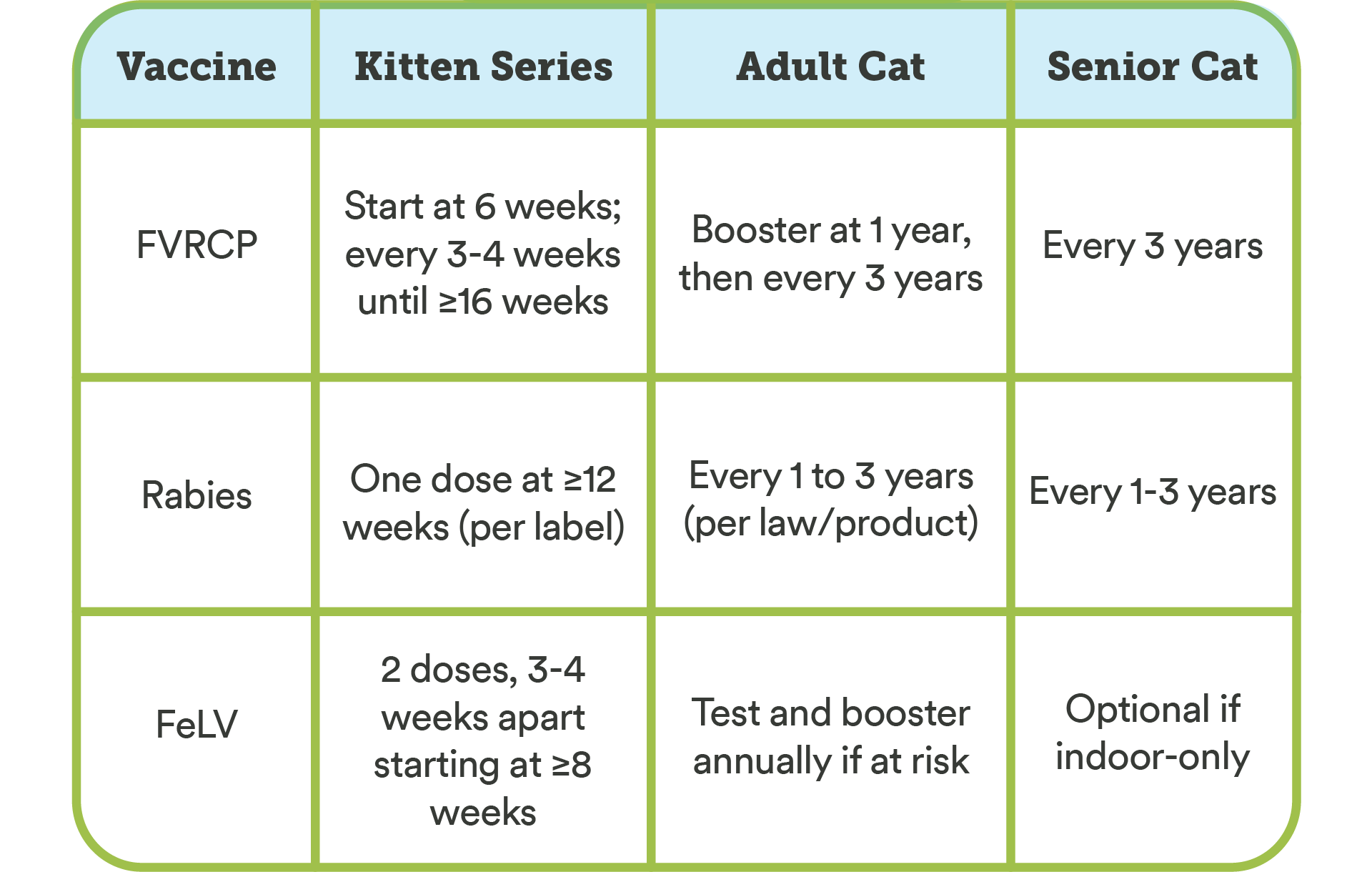
Kittens will need this vaccine at 12 weeks old (per label).
Rabies boosters are required every 1–3 years for cats (frequency based on the type of rabies vaccination given and your local state/county laws).
What Vaccines Does My Cat Need Annually?
While the FVRCP and Rabies vaccines are recommended for all cats, the FeLV vaccine is considered a "core" vaccine only for kittens. It is classified as a non-core vaccine or lifestyle vaccine for adult cats, based on your cat's age, home location, daily activities, and frequency of contact with other animals.
Discuss these factors with your veterinarian to see if the FeLV vaccination is suitable for your cat.
Non-Core Vaccines for Cats
FeLV VACCINE (FELINE LEUKEMIA VIRUS)
Feline Leukemia is an incurable disease, occurring by itself or in combination with the feline immunodeficiency virus (FIV), a deadly AIDS-like virus. It is transmitted through contact with bodily fluids from an infected cat, including bite wounds. It can also be transferred from mother to newborn and through cats sharing bowls.
FeLV vaccine is recommended for all kittens, starting with 2 doses at 8 weeks old that are 3–4 weeks apart.
Continued tests and boosters are given based on lifestyle and exposure risks.
VACCINATION SCHEDULE FOR CATS
Like many human vaccines, some cat vaccines require boosters throughout life to help keep them protected. The recommended schedule of cat boosters for both core and lifestyle-based vaccinations is outlined below.