
Loading...
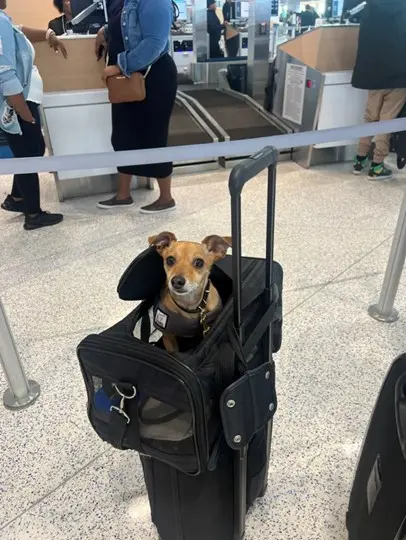
Clearly mark the pet carrier with the words “Live Animal” and arrows that show which way is up, with a label containing your name, phone number, address, and destination contact information. Also, double-check the zippers or other closure mechanisms, even if you’ve flown with this specific carrier in the past. “You don’t want to be TikTok famous when your pet escapes on the airplane,” says Philippa Pavia, a veterinary surgeon and vice president of medical operations for Thrive Pet Healthcare who often flies with her Chihuahua mix, Pierre.On travel day, follow the action plan you created with your vet for food, water, and exercise. “I recommend feeding a small, easily digestible meal a few hours prior to the flight and decreasing water consumption,” says Pavia. “I also recommend exercising your pet before going to the airport so they’re ready for a nap.”If your pet is small enough to fly in the cabin, go to the passenger check-in desk, where an agent will ask to see your dog’s required paperwork. Once you’ve got the all-clear and paid the pet carry-on fee, head to security. Deal with your shoes, liquids, laptop, and other items before tending to your dog. Then, remove your dog from the kennel and place the carrier on the conveyor belt to go through the X-ray machine. When it’s your turn to go through the metal detector, TSA says to carry or walk your dog through. You’ll need to remove your dog’s collar or leash if any part of it is metal, to avoid setting off the alarm. “If your pet could escape, you should have a collar and leash that can remain on them through the metal detector,” says Pavia.